

Are Traditional Studios Dead? How Independent Creators Are Taking Over Entertainment in 2026

The headlines seem dramatic these days: "Hollywood is dying!" "Independent creators are the future!" "Traditional studios can't keep up!" But when we dig deeper into what's actually happening in entertainment right now, the story is way more nuanced, and honestly, more exciting, than the doom and gloom suggests.
We're not witnessing the death of traditional studios. Instead, we're seeing something far more interesting: a complete transformation of how entertainment gets made, distributed, and consumed. And yes, independent creators are playing a huge role in this shift.
The Real State of Traditional Studios
Let's get one thing straight: major studios aren't going anywhere. But they are fundamentally changing how they operate, and it's pretty fascinating to watch.
Between 1995 and 2009, Hollywood's big players were pumping out around 112 theatrical releases per year. Fast forward to today, and that number has dropped to about 83 releases annually. In 2024, we saw roughly 95 wide releases hit theaters, with projections around 110 for 2025.

This isn't a sign of decline: it's strategic precision. Studios have learned that throwing everything at the wall to see what sticks doesn't work anymore. Universal is doubling down on proven franchises, Warner is rebuilding through global intellectual property, and Disney is finally prioritizing quality over quantity.
The shift is clear: instead of competing on volume, studios are now competing on precision. They're being incredibly selective about what gets the green light, and honestly, that's probably better for everyone.
Where the Money Is Really Going
Here's where it gets interesting. Studios aren't abandoning entertainment: they're just redirecting their massive budgets in surprising directions.
A huge chunk of that money is flowing into live sports deals. We're talking about NBA contracts worth $76 billion. Sports content is reliable, it draws consistent audiences, and it can't be pirated the same way movies can.
The other major investment? Niche streaming shows for dedicated fanbases. Instead of trying to create content that appeals to everyone (and often appeals to no one), studios are getting laser-focused on specific audiences who will actually engage deeply with their content.
This strategic shift has created what we call the "missing middle": those mid-budget movies that used to be Hollywood's bread and butter suddenly have nowhere to land. They're too big for independent budgets but too risky for studios focused on blockbusters.
The Independent Creator Revolution
While studios were reorganizing, something incredible was happening on the other side of the entertainment world. Independent creators weren't just filling the gaps: they were creating entirely new categories of content.
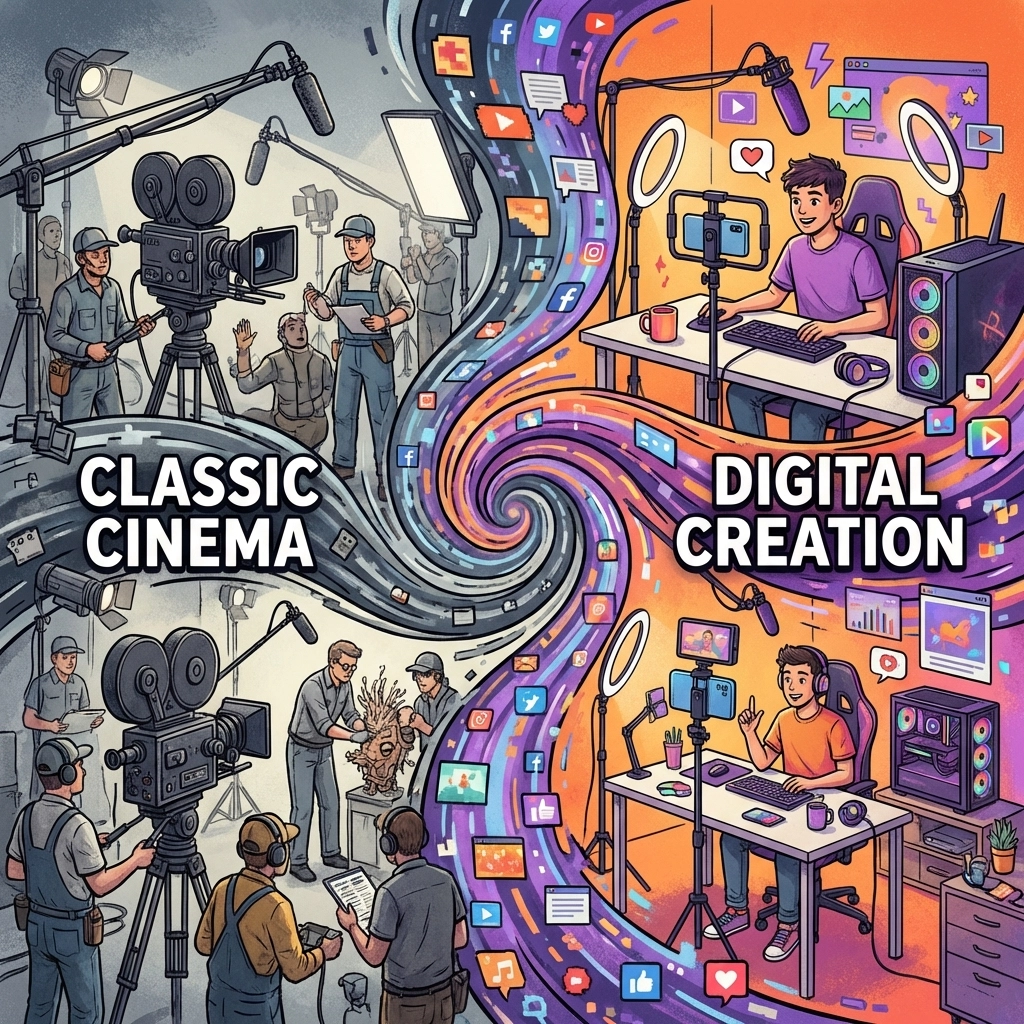
What we're seeing in 2026 is unprecedented access to high-quality production tools, global distribution platforms, and direct audience relationships. A creator with a smartphone, some editing software, and a compelling story can potentially reach millions of people without ever setting foot in a traditional studio.
The numbers are staggering. Independent creators are generating billions of views, building loyal communities, and: here's the kicker: often making more money per project than their studio counterparts when you factor in profit-sharing and creative control.
But here's what most people are missing about this "takeover": successful independent creators are starting to operate more and more like traditional studios. They're building teams, developing systematic content pipelines, and creating their own mini-entertainment empires.
The Convergence We Didn't See Coming
The most fascinating part of this whole evolution is that instead of independent creators completely displacing traditional studios, we're seeing convergence. The lines are blurring in ways that are creating entirely new possibilities.
Creators are adopting studio-like operational structures: hiring teams, developing multiple projects simultaneously, and thinking strategically about their content calendars. Meanwhile, studios are embracing creator-style agility, direct audience engagement, and rapid iteration based on real-time feedback.
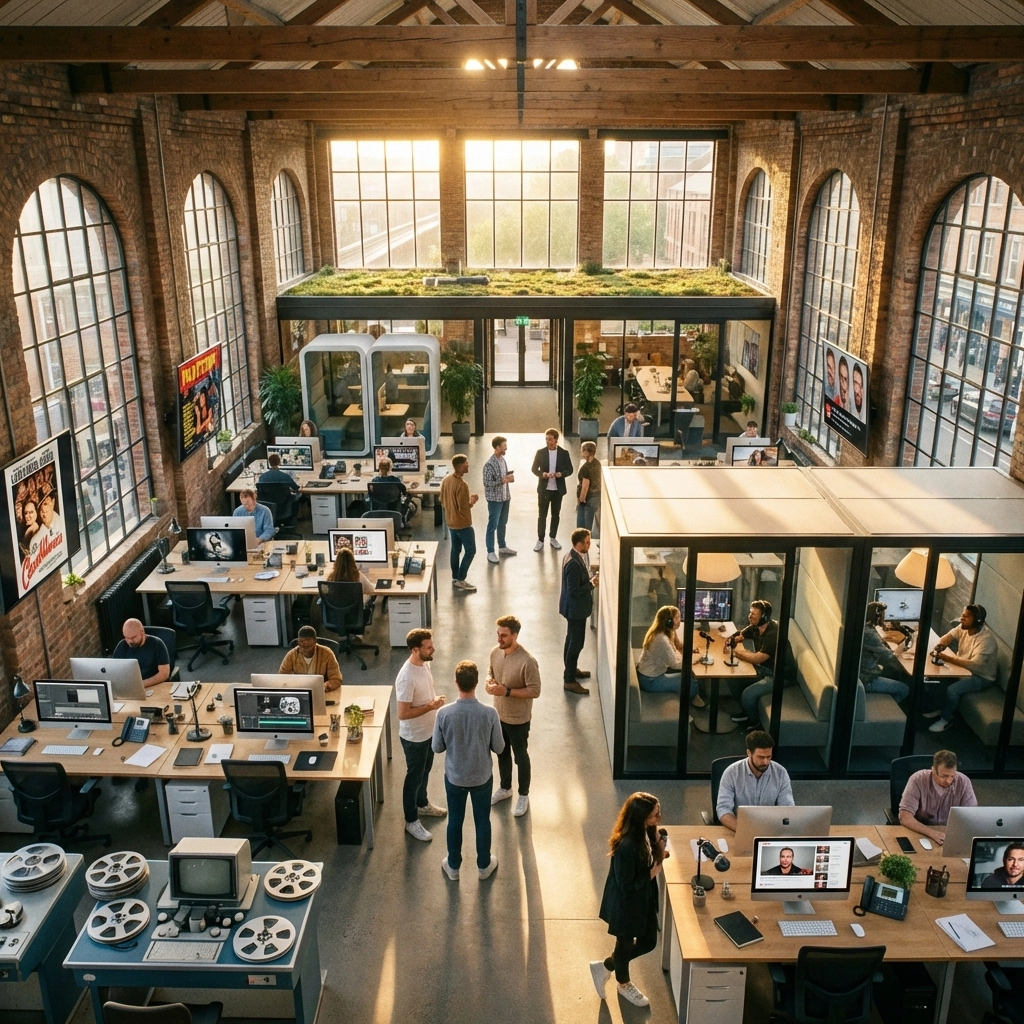
We're seeing hybrid models emerge everywhere. Studios are partnering with creators for authentic content. Creators are scaling up their operations to handle bigger projects. And platforms like BrickHouse are creating spaces where both traditional and independent content can thrive side by side.
The result? We're getting the best of both worlds: the production value and resources of traditional studios combined with the authenticity and innovation of independent creators.
What This Means for Entertainment's Future
The theatrical experience isn't disappearing, but it's transforming from the defining distribution channel into one window among many. Sound stage occupancy in Los Angeles dropped from above 90% to 63% in 2024, and California saw 379 entertainment establishments close between 2021 and 2023.
But before we panic, some analysts are projecting a potential theatrical rebound in 2026, with domestic box office revenue potentially approaching $9.8 billion. The key word here is "rebound": not return to the old way of doing things.
What we're moving toward is a more diverse, more resilient entertainment ecosystem. Instead of a handful of major studios controlling everything, we have:
• Traditional studios focusing on high-precision, high-budget content • Independent creators serving niche audiences with authentic, personalized content • Hybrid models combining the strengths of both approaches • Multiple distribution channels ensuring content reaches audiences wherever they are • Direct creator-to-audience relationships that bypass traditional gatekeepers
The Opportunities This Creates
For creators, this convergence opens up incredible opportunities. You don't have to choose between "going independent" or "working with studios" anymore. The most successful creators in 2026 are the ones who understand how to leverage both traditional and independent approaches.
For audiences, this means more variety, more authentic content, and more ways to discover entertainment that actually speaks to them. No more settling for lowest-common-denominator content designed to appeal to everyone and delight no one.
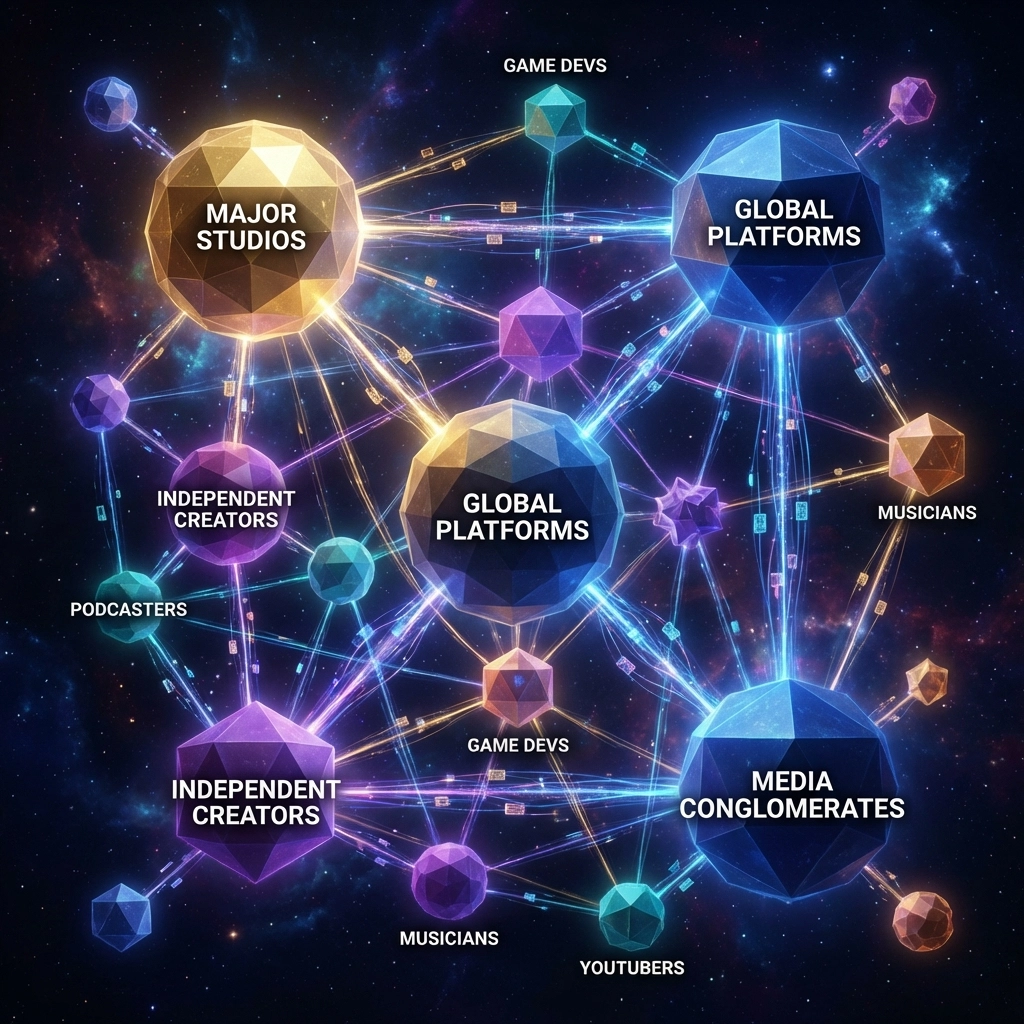
For the industry as a whole, this transformation is creating a more sustainable, more creative, and more responsive entertainment landscape. When creators have direct relationships with their audiences and studios focus on precision over volume, everyone wins.
The Bottom Line
Traditional studios aren't dead: they're evolving. Independent creators aren't taking over: they're collaborating and converging with existing systems to create something entirely new.
What we're witnessing in 2026 is the emergence of a more mature, more diverse, and frankly more exciting entertainment industry. One where quality storytelling matters more than corporate politics, where creators have more paths to success, and where audiences get content that actually connects with them.
The question isn't whether traditional studios will survive or whether independent creators will dominate. The question is how we'll all adapt to this new landscape where the best content: regardless of how it's made or who makes it: finds its audience.
And honestly? We think that's a much better question to be asking.

Comments